


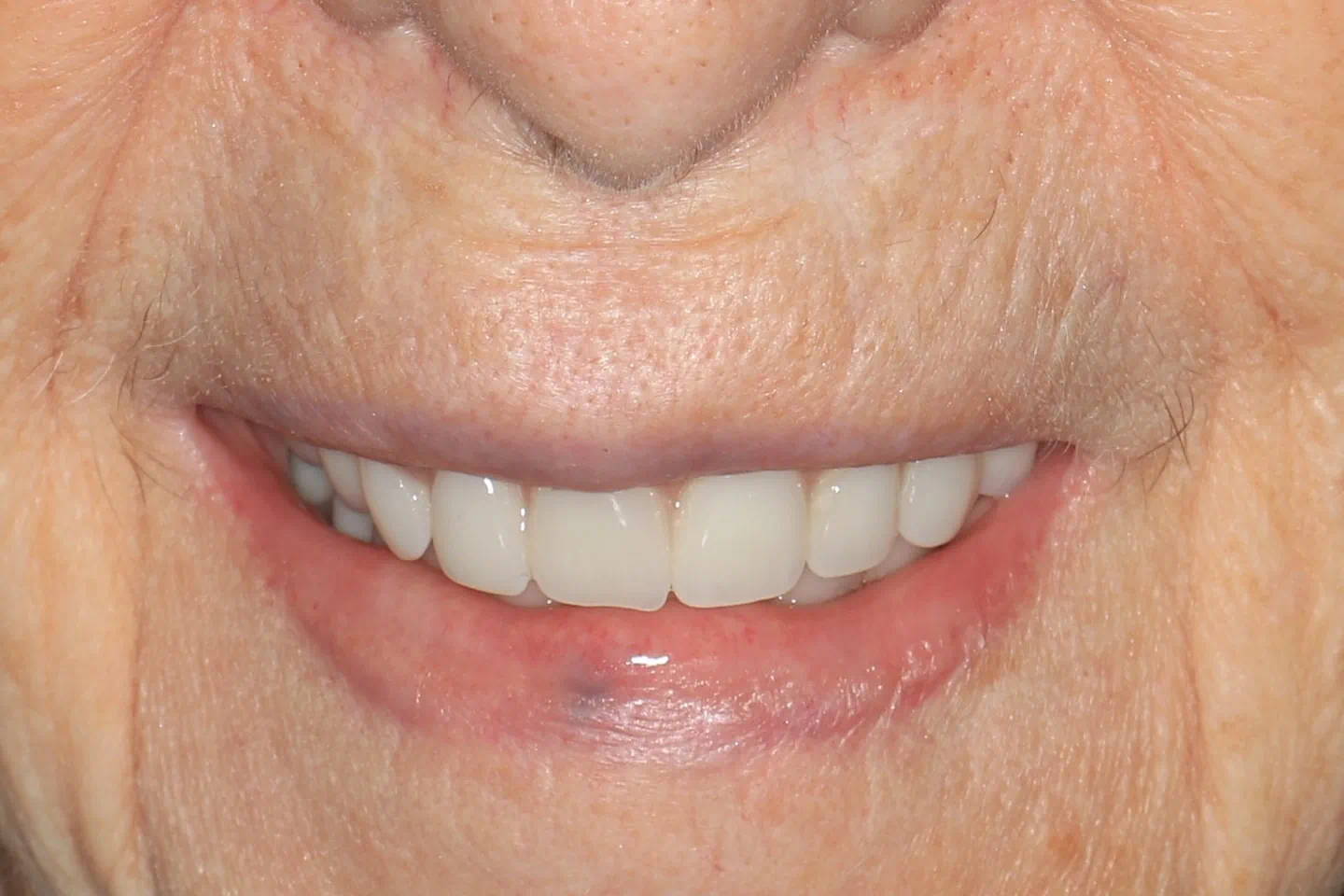
Losing a single tooth feels like a small thing until you notice it every time you smile, chew or speak. Many people assume dentures are only for people missing most of their teeth, so they are surprised to learn there is a version made for just one. It is often called a one tooth denture, and it is a real option worth understanding before you decide how to replace the gap.
The short answer: a one tooth denture is a removable partial denture that replaces a single missing tooth. It is one of three common ways to fill a gap, along with a bridge and an implant, and the right choice depends on your gums, your neighboring teeth and what you want from the result.
What Is a One Tooth Denture?
A one tooth denture is a custom made replacement tooth attached to a small base that sits comfortably against your gums. It is held in place by gripping or resting against the teeth next to the gap, and you take it out to clean it. It is a type of partial denture, the kind we explain on our dentures page, only scaled down to a single tooth.
Because it is removable and does not need surgery, it is often the quickest and least invasive way to close a gap. That convenience comes with trade-offs, which we will be plain about below.
How Does It Stay in Place?
Your denture is designed to fit the exact shape of your mouth, so it rests snugly on the gum and uses your neighboring teeth for support. Most people find it stays put during normal eating and talking, though it can feel different at first.
Where the missing tooth sits matters. A front tooth shows when you smile, so appearance and a natural looking shade are the priority. A back tooth takes more chewing force, so stability and comfort under pressure matter more. We plan around where your gap is.
One Tooth Denture vs Bridge vs Implant
Each option replaces the tooth in a different way, and none is right for everyone.
· One tooth denture: removable, no surgery, and usually the least invasive. It relies on neighboring teeth for support and needs to come out for cleaning.
· Dental bridge: fixed in place, so you do not take it out. A traditional dental bridge uses the teeth on either side of the gap as anchors, which means those teeth are reshaped. If you want the full picture, our beginner's guide to dental bridges walks through it.
· Dental implant: fixed, and it replaces the root as well as the crown. It leaves the neighboring teeth alone but needs a minor surgical step and enough healthy bone. You can read about single tooth implants and what the crown on top involves under implant restorations.
If you are weighing a denture against an implant more broadly, our post on dental implants vs dentures compares them side by side.
The Downsides, Plainly
A one tooth denture is not the perfect answer, and it is better to hear that now. It can move slightly, especially when you are new to wearing it. It may leave a sore spot while your gums adjust. You have to remove it to clean it properly. And because it sits on the gum rather than in the bone, it does not do what a root does for the jaw in the long run, which is one reason many people choose an implant when it suits them.
When Is a One Tooth Denture the Right Choice?
It can make good sense if you want a non surgical option, if you need something sooner while you decide on a longer term plan, if your health or bone situation makes surgery less suitable, or if you want to keep your costs and number of visits lower. It can also be a reasonable starting point if you are not ready to commit to a fixed solution.
It may not be the best fit if the neighboring teeth are weak or loose, or if you would be happier with a fixed tooth you never have to take out. We will tell you honestly which way your mouth points.
How Do You Care for It?
Treat it like your natural teeth, with a little extra routine. Take it out and rinse it after eating. Clean it daily with a soft brush and a denture cleaner rather than regular toothpaste, which can scratch it. Brush your natural teeth and gums as usual, and keep the denture out at night if we have advised that. Store it in water or a cleaning solution so it does not dry out or warp. Bring it to your visits so we can check the fit, since your gums can change over time.
What to Expect at Your Appointment
It starts with a conversation about what you would like and what concerns you. We examine your teeth and gums, and we may take X-rays to see the bone and neighboring teeth. If the tooth is still in place, we will talk about extraction first. From there, we take impressions, check the shade and shape with you, and fit the denture, adjusting it so it is comfortable. A follow up lets us fine tune the fit after you have worn it for a bit. A regular oral exam is also a good time to ask about a missing tooth you have been putting off.
Talk With Us About Replacing a Missing Tooth
If you are missing a tooth and are not sure which option suits you, a conversation is a good place to start, and it does not commit you to anything. At General and Implant Dentistry in Worcester, we will look at your mouth, explain your choices in plain language, and help you decide what fits your life and budget. Contact us to schedule a visit.
FAQs
Q. Can you get a denture for just one tooth?
Yes. A one tooth denture is a removable partial denture that replaces a single missing tooth. We design it to fit your mouth and match your other teeth.
Q. Is a one tooth denture better than a bridge or implant?
It depends on your situation. A denture is removable and less invasive, while a bridge or implant is fixed. Each has trade-offs, and we can help you compare them for your mouth.
Q. Will people notice I am wearing one?
A well made denture is shaped and shaded to blend with your natural teeth. Fit matters, so we check it and adjust it until it looks and feels natural.
Q. Can I eat normally with a one tooth denture?
Most people can eat comfortably once they adjust. It can feel different at first, so start with softer foods and build up as you get used to it.
Q. How long does it take to get one?
It usually takes a few visits for the exam, impressions, fitting and follow up. We will give you a clear idea of the timeline when we plan your treatment.
Get in Touch
Don’t wait for symptoms to worsen. Book your consultation today and take the first step towards better health.

Call Us: +1 (508) 757-0591
Email Us: admin@generalandimplant

Mon & Thu: 8 a.m. – 5 p.m.
Tue: 8 a.m. – 2 p.m.
Wed: 8 a.m. – 1 p.m.
Fri – Sun: Closed

© 2026 General and Implant Dentistry | All Rights Reserved | Privacy Policy | Digital Marketing by Remedo